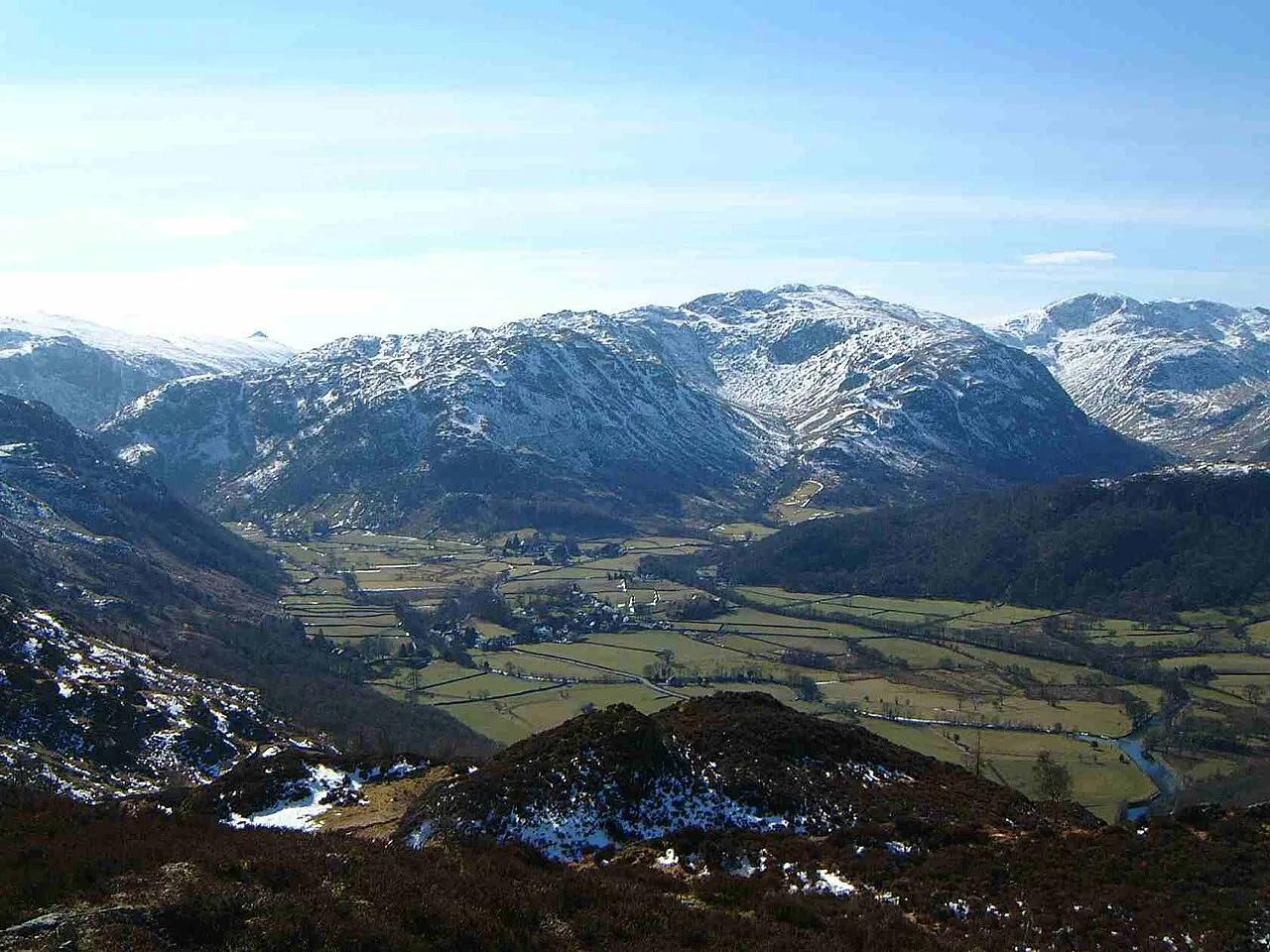
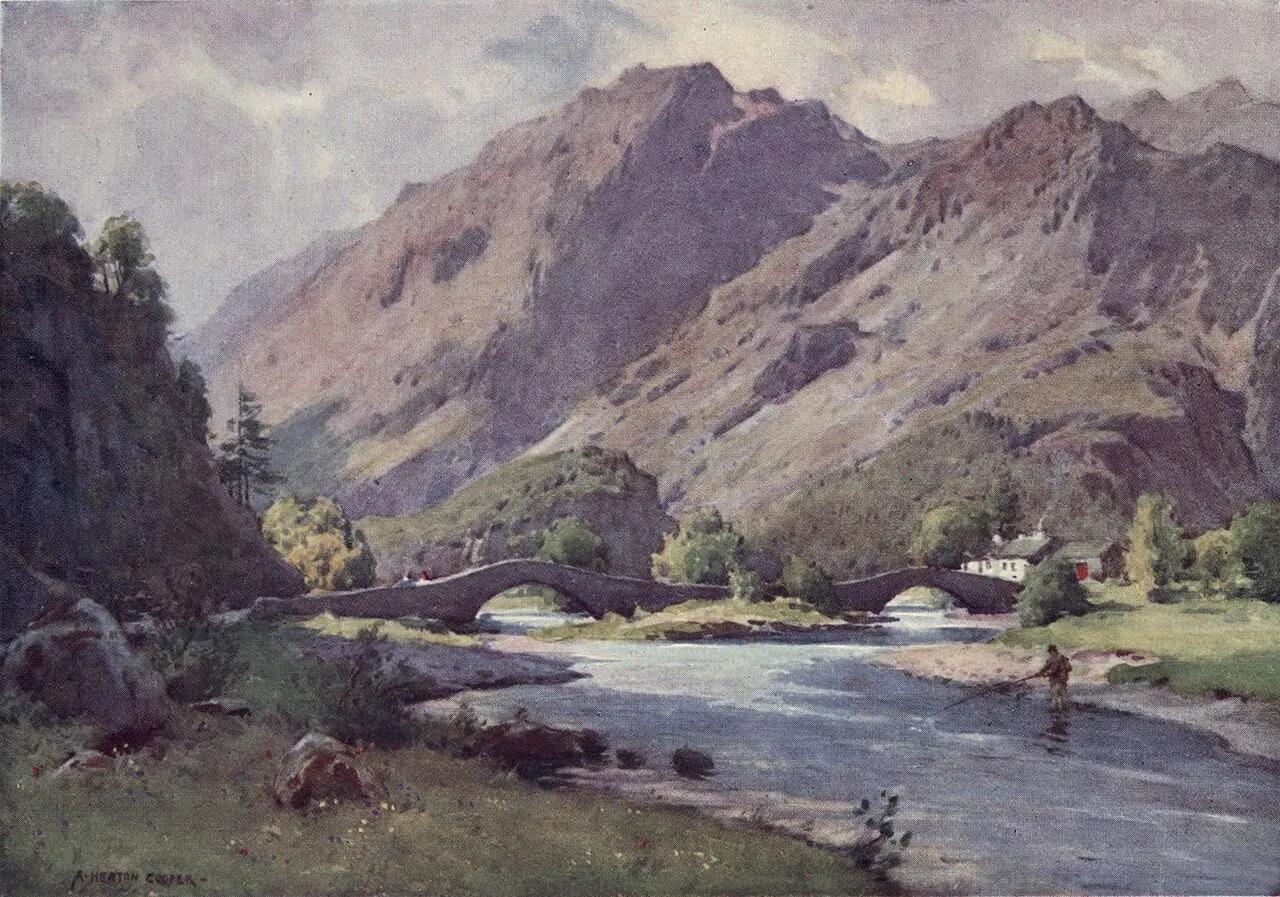
Bowder Stone, Borrowdale: Visitor Guide & Geology
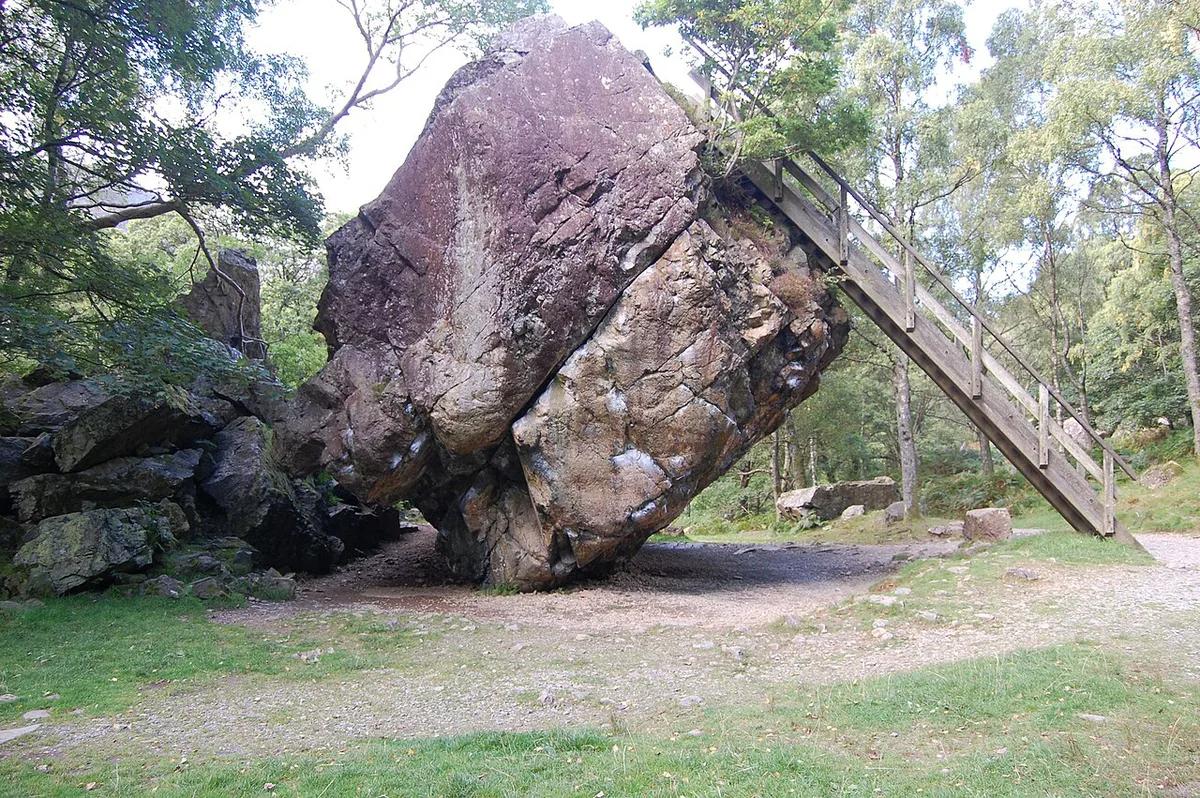
Last updated November 2026: the Bowder Stone is a huge detached boulder in the woods of Borrowdale, south of Grange in the Lake District. By car, the practical approach is to use the National Trust Bowder Stone pay-and-display car park and follow the path to the rock, a walk of about 10 minutes. For a longer day, use our guide to walking Borrowdale. Before setting out, look into access, parking terms and whether you can use the ladder to the top.
Featured image: Stephen Darlington, CC BY-SA 2.0, via Wikimedia Commons.
Where Is the Bowder Stone and How Do You Reach It?
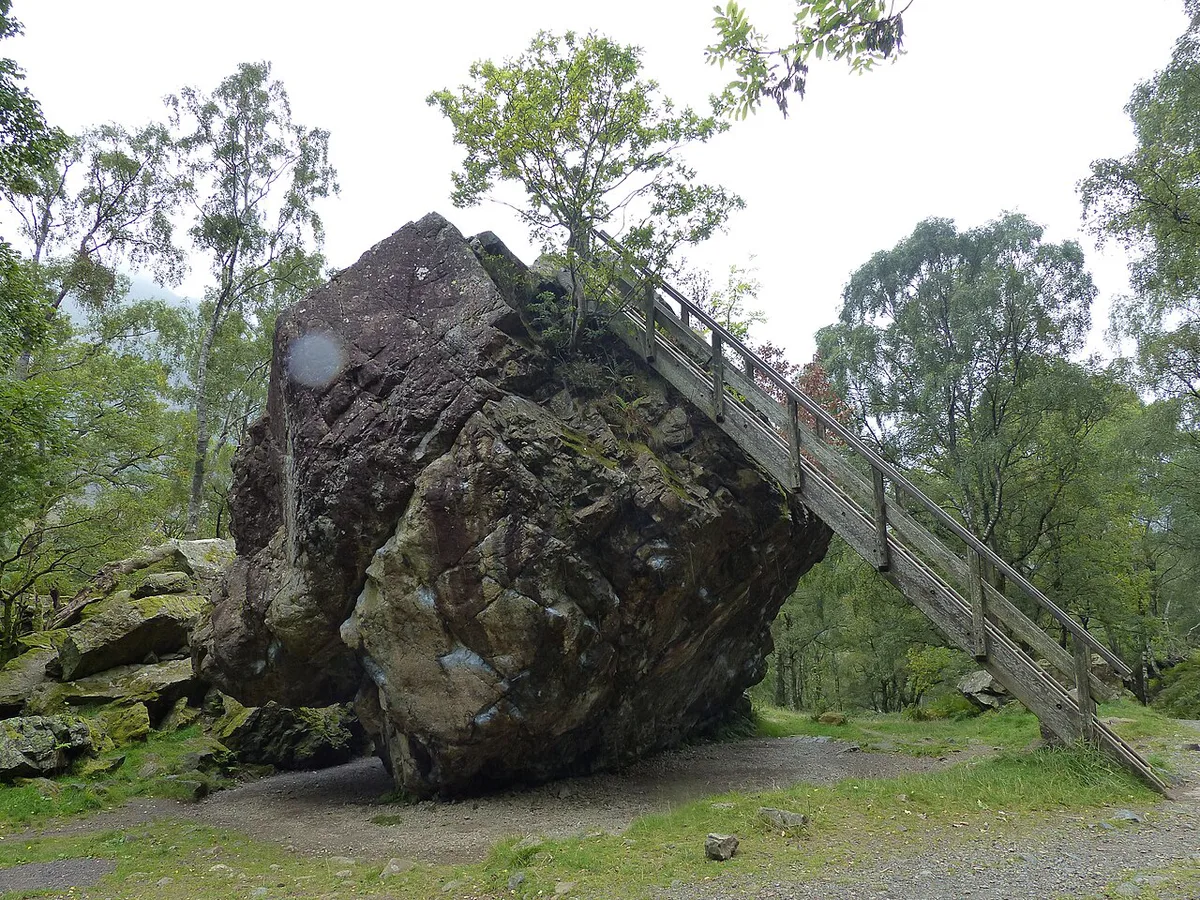
Drivers should aim for the car park named for the stone, rather than simply setting navigation to Grange or Borrowdale. Allow for the walk back as well, because the approach time above only takes you to the boulder.
Path junctions, signs and surface conditions can affect your visit, so look at a current map before you leave. Start with the National Trust's Borrowdale guide when looking for visitor information and notices.
Arriving on foot? Plan your whole route there and back instead of relying on the short car park approach. Our walks around Grange can help with local ideas, but check that your chosen route actually reaches the stone.
Without a car, plan your return service and the walking route from your stop before you set out.
How Easy Is the Visit?
A short walking time doesn't tell you whether a path is easy or accessible. Gradient, steps, loose ground, roots, mud and drainage matter more if you use a wheelchair, push a buggy or have limited mobility. Step-free or pushchair-friendly access isn't established here. Ask the National Trust about those specific barriers before committing to the trip.
Treat reaching the boulder and climbing it as separate decisions. You may be comfortable on the approach but prefer to stay at ground level. With children, assess both parts and decide how closely each child needs supervising. Dog owners should look for current instructions covering the path and the area around the rock.
In late November, give yourself plenty of daylight and wear footwear with good grip. Rain, ice or fading light are good reasons to reassess the walk, particularly if anyone in your group is unsteady.
Can You Climb the Bowder Stone?
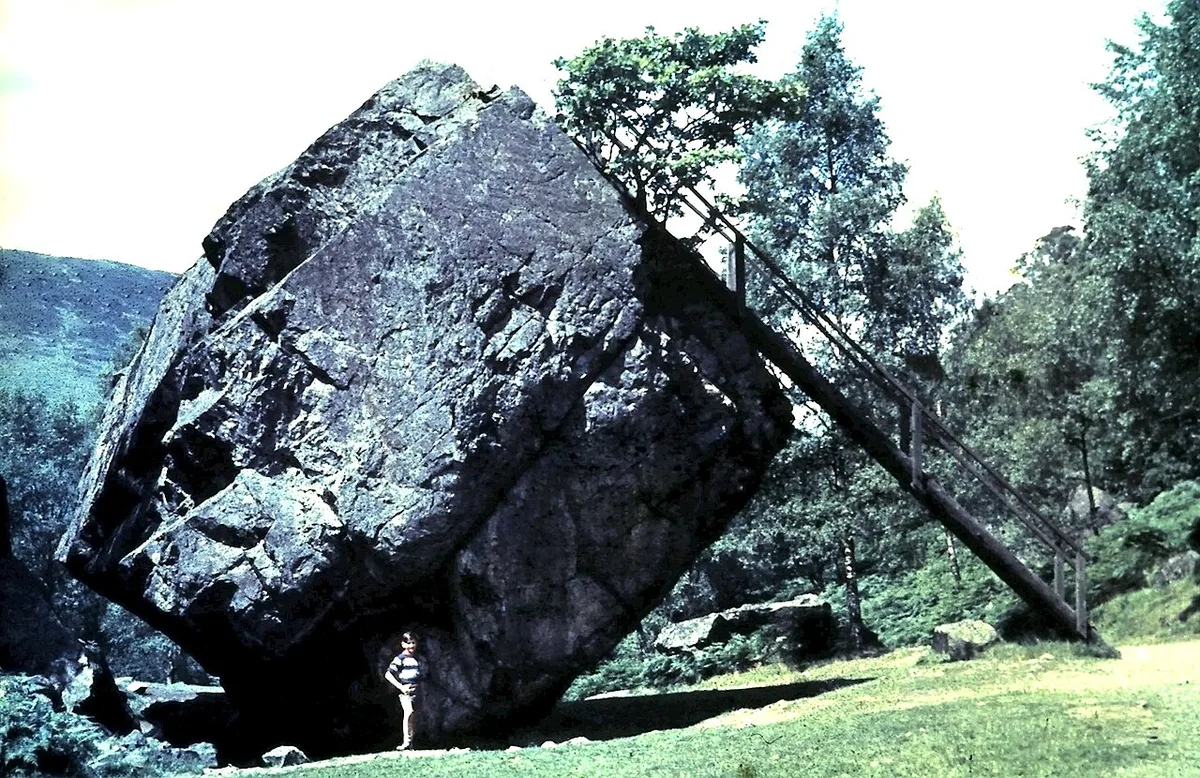
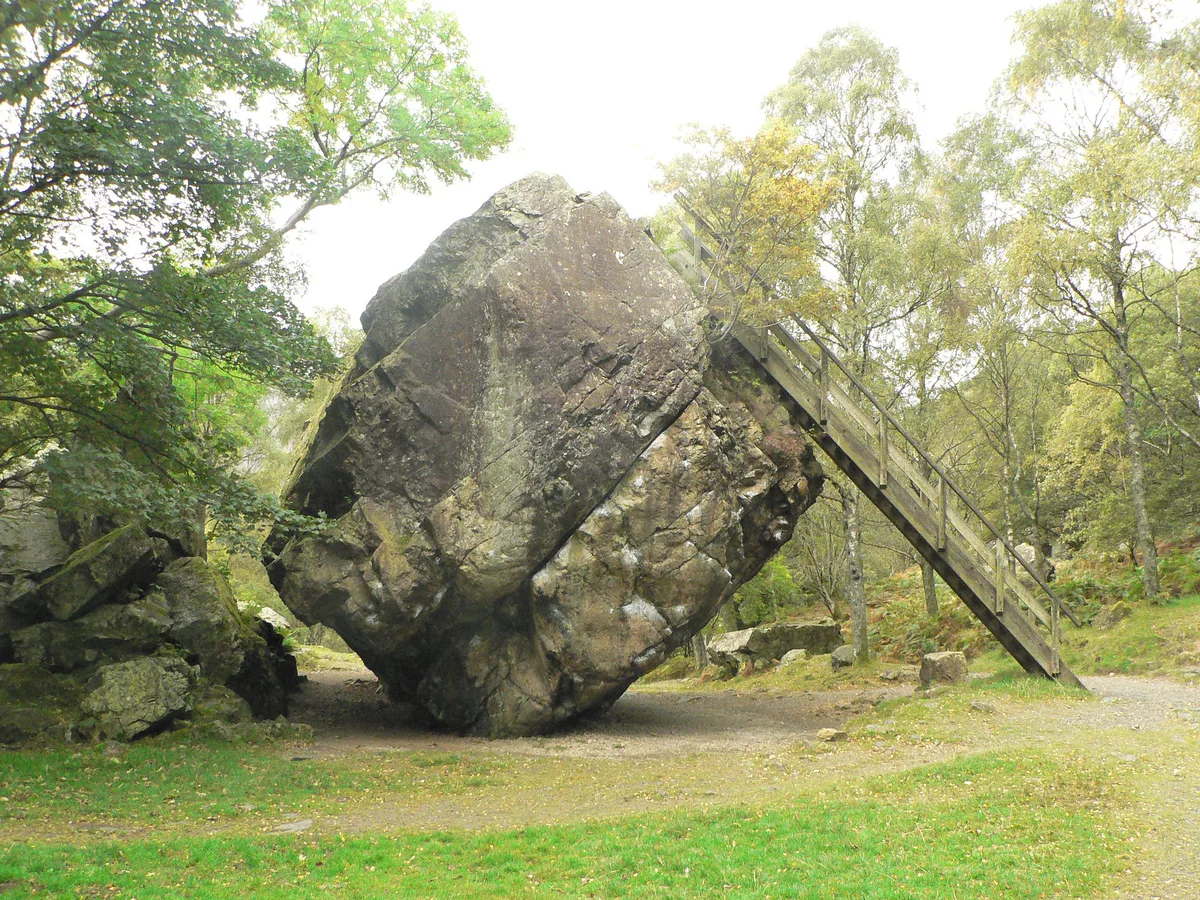
A ladder to the top is part of the visitor experience described for this landmark. Its current condition and availability need checking, so don't make climbing the only reason for a special journey.
On arrival, follow any posted instructions or closure notices. Stay off the ladder if access is restricted or it appears damaged. Avoid improvising another way up the rock. Wet or icy footing and poor light also warrant caution.
You can view the boulder from the ground, so climbing is optional. Its balanced appearance is striking, but appearance alone says nothing about stability or climbing safety.
Bouldering on the Bowder Stone's Overhanging Rock
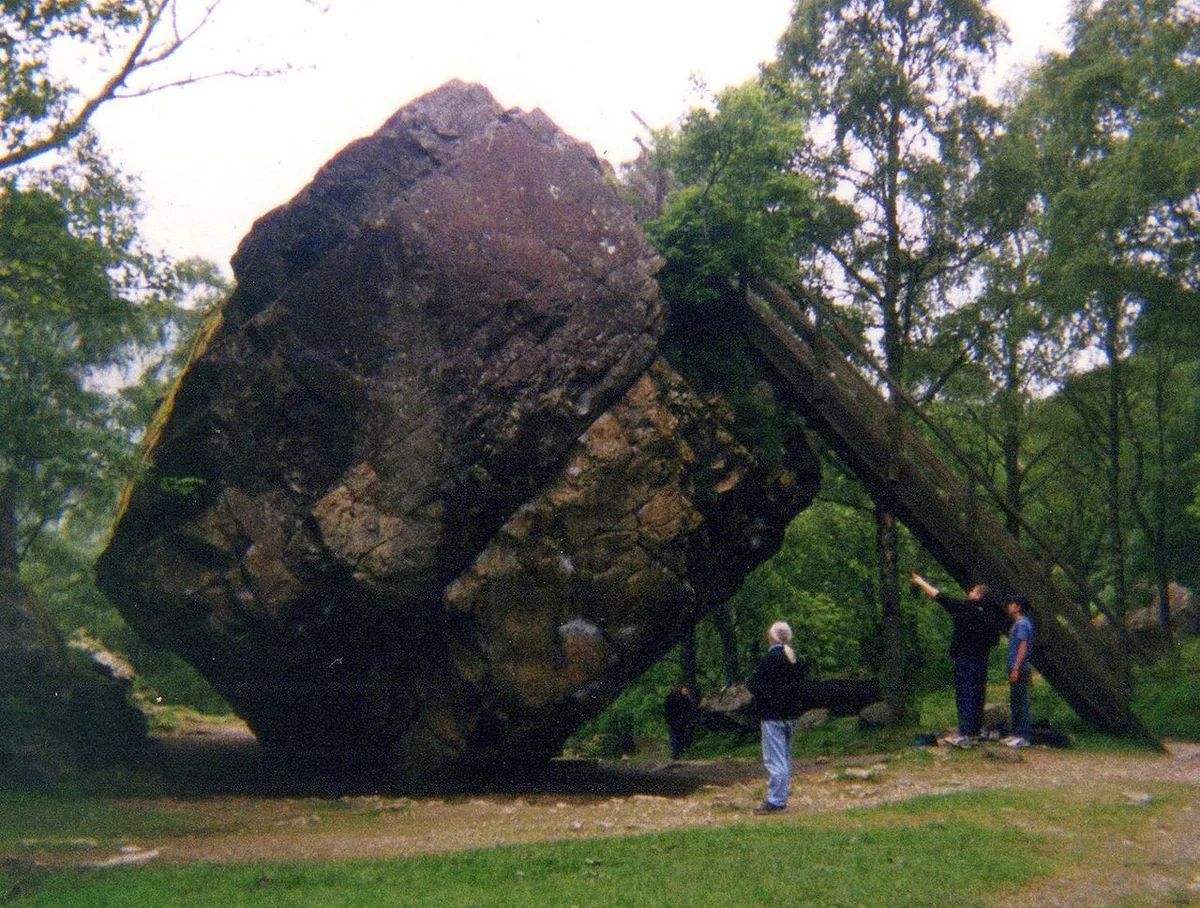
You may see people climbing the rock itself, well away from the top of the ladder. The Bowder Stone is known among rock climbers as a bouldering spot, and its steep, overhanging rock is the draw for experienced climbers. Chalk marks on the holds can be a sign of this use.
This is a different activity from going up the visitor ladder. Bouldering is done without a rope, and an overhang can be strenuous and awkward to fall from. Don't treat it as a casual scramble or let children copy the climbers.
- If you're watching: keep clear of the area below a climber, including their landing mats, and keep dogs and children with you.
- If you plan to climb: check a current climbing guidebook for the problems and grades, along with any access notices on site. The British Mountaineering Council is a useful starting point for access and good-practice advice.
- If you're taking photos: stand back, and ask before taking close-up pictures of someone climbing.
Sharing the space matters if you've come for photographs too. You may need to choose another angle or wait before getting a clear view of that side of the boulder.
Bowder Stone Parking, Costs and Visit Time
National Trust members park free, while the car park operates as pay-and-display for paying visitors. The machine and National Trust information give the current tariff, payment methods and restrictions. Members should also check whether they need to scan a card or display proof; free parking may have conditions.
Parking is a separate question from access to the boulder. A parking charge shouldn't be read as an admission ticket to the stone. Current opening restrictions, ladder access times and facilities also aren't established here.
For your total stop, add both walking directions to the time you want beside the rock. Leave extra room if your group walks slowly, wants photographs or may need to wait before using the ladder. If your schedule is tight, view the stone from the ground and keep the climb optional.
How Did the Bowder Stone Get There?
One explanation is that the boulder fell from Bowder Crag after the Borrowdale glacier retreated, between 13,500 and 10,000 years ago. Treat that sequence as an interpretation of its movement, rather than an observed event or a precise date.
Its material has a much older story. It is described as andesite, a volcanic lava rock, associated with the Borrowdale Volcanic Group. That volcanic history is placed in the Ordovician period, 485 to 443 million years ago. This broad geological interval neither gives the rock an exact age nor dates the boulder's fall. Its weight has been put at 2,000 tons, which is best treated as an estimate.
Local legend offers a livelier explanation. In this telling, giants resented human newcomers. During a battle, one giant defended the land by hurling the great rock at the invaders. Enjoy that as folklore, separate from the geological explanation.
How the Bowder Stone Became a Tourist Attraction
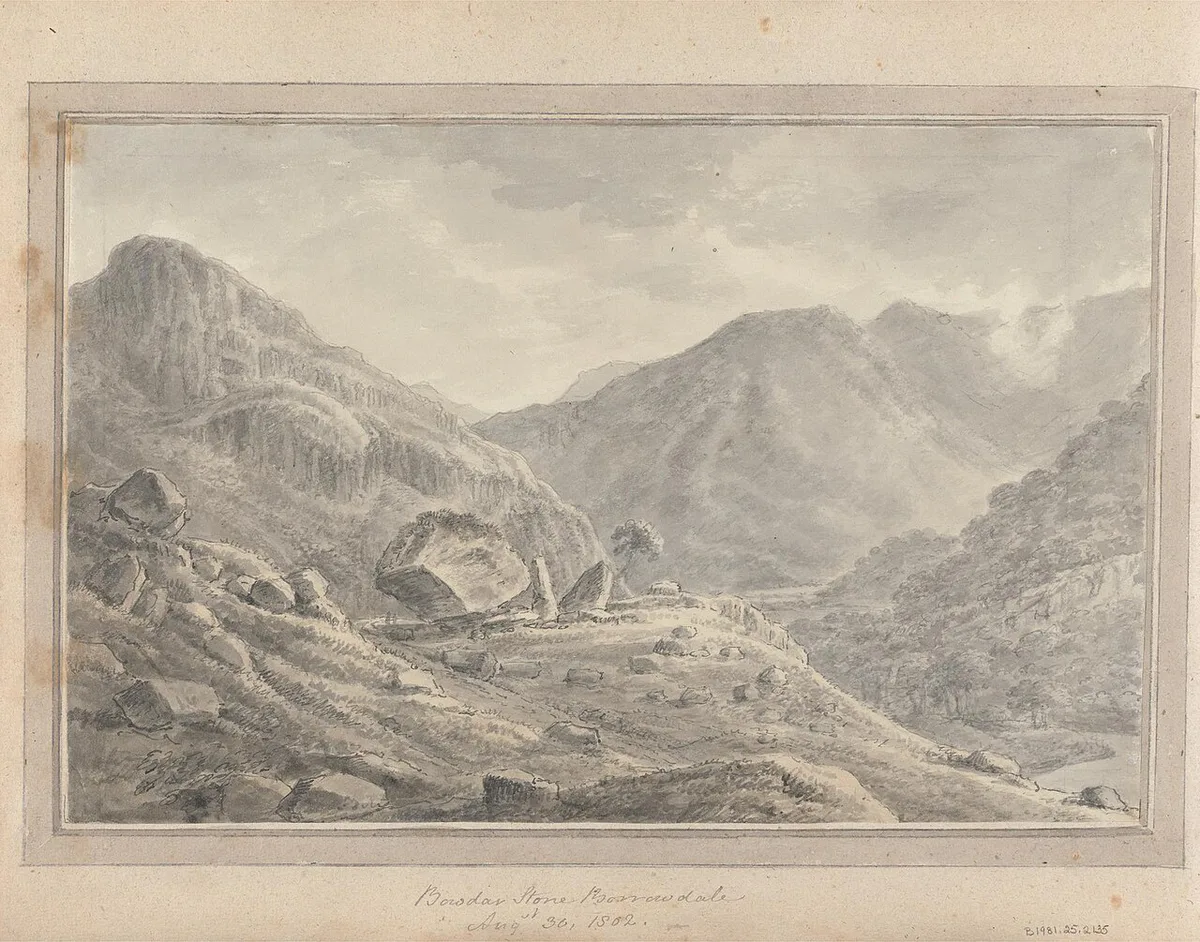
People have been making a point of visiting this rock since long before today's walkers. Much of its early fame as a sight is linked to Joseph Pocklington, a wealthy and eccentric developer of picturesque property around Keswick. In the late 18th century, he set about turning the boulder into an attraction for visitors touring the Lakes.
His additions are generally described as including:
- a ladder, so that visitors could reach the top
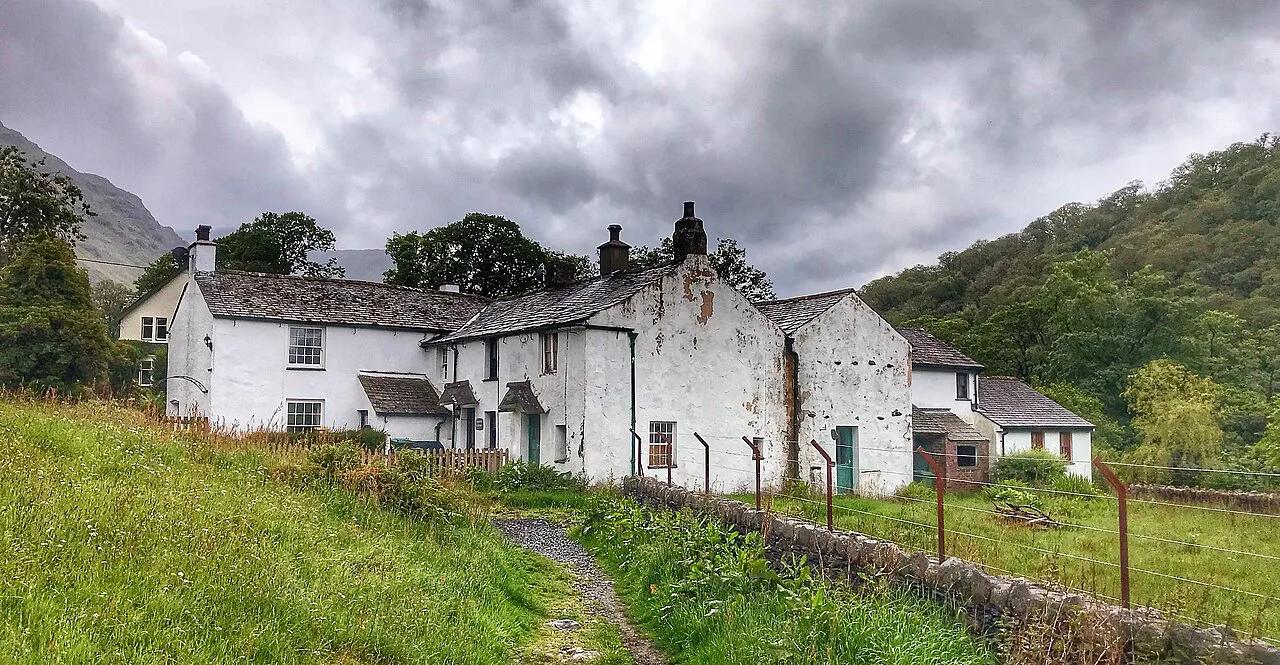
- a cottage nearby for a resident guide, a role associated with an elderly woman who showed people the stone
- a small standing stone placed close by to add to the scene
- an opening beneath the boulder, through which visitors could touch or shake hands from opposite sides
The staging suited an age when travellers came to Borrowdale looking for dramatic, romantic scenery, and not everyone admired Pocklington's embellishments. The poet Robert Southey was among the writers who described a visit to the stone in the early 19th century.
When you visit, look at how little of the huge mass appears to touch the ground. That narrow base is central to the spectacle, and it explains why the hand-through-the-gap ritual caught people's imagination. Don't assume every historical feature can still be seen or used, and don't crawl or dig around the base to find the opening. For further background and references, see the Bowder Stone entry on Wikipedia.
Is the Bowder Stone Worth Visiting?
Our editorial verdict: consider it if a large natural landmark, rock formation or local legend interests your group. Skip a special detour if guaranteed ladder access or step-free travel is essential and you can't confirm it.
If you want to extend the day, compare the Castle Crag route guide as a separate walking option. Another possibility is to plan a visit to Lodore's waterfall. Don't assume either connects directly with your Bowder Stone approach; map the link and return journey first.
For a longer route onto high ground, consult the Lake District mountain forecast. A mountain forecast doesn't tell you the condition of the woodland path or ladder, so judge those separately.
| Visitor situation | Verdict or trade-off | Check before going |
|---|---|---|
| Short stop by car | A practical option if your group can manage the approach | Parking tariff, return walk and time wanted at the stone |
| Adding it to a longer walk | Gives the outing a landmark, but needs wider route planning | Mapped connection, extra effort and return route |
| Visiting with children | Decide separately about the walk and the climb | Path hazards, supervision needs and ladder instructions |
| Limited mobility or pushchair | Suitability is unconfirmed | Steps, gradient, surface, width and other barriers |
| Without a car | Depends on a workable outward and return journey | Current service, stop, onward walk and seasonal timetable |
| Mainly geology or legend | The boulder is the main subject; on-site interpretation is unconfirmed | Whether information is available at the site |
| Wet weather or limited daylight | Postpone if footing or visibility makes your group uncomfortable | Path conditions, ladder restrictions, forecast and daylight |
Frequently Asked Questions
Is the Bowder Stone an erratic?
A glacial erratic is a rock carried by ice and left away from its source. The Bowder Crag explanation instead describes a fall after the glacier retreated. On that account, it is better understood as a rockfall boulder.
Notes for your next walk
Optional updates to our Lake District walking guides.