Scafell Pike in Winter: Routes, Risks and Planning
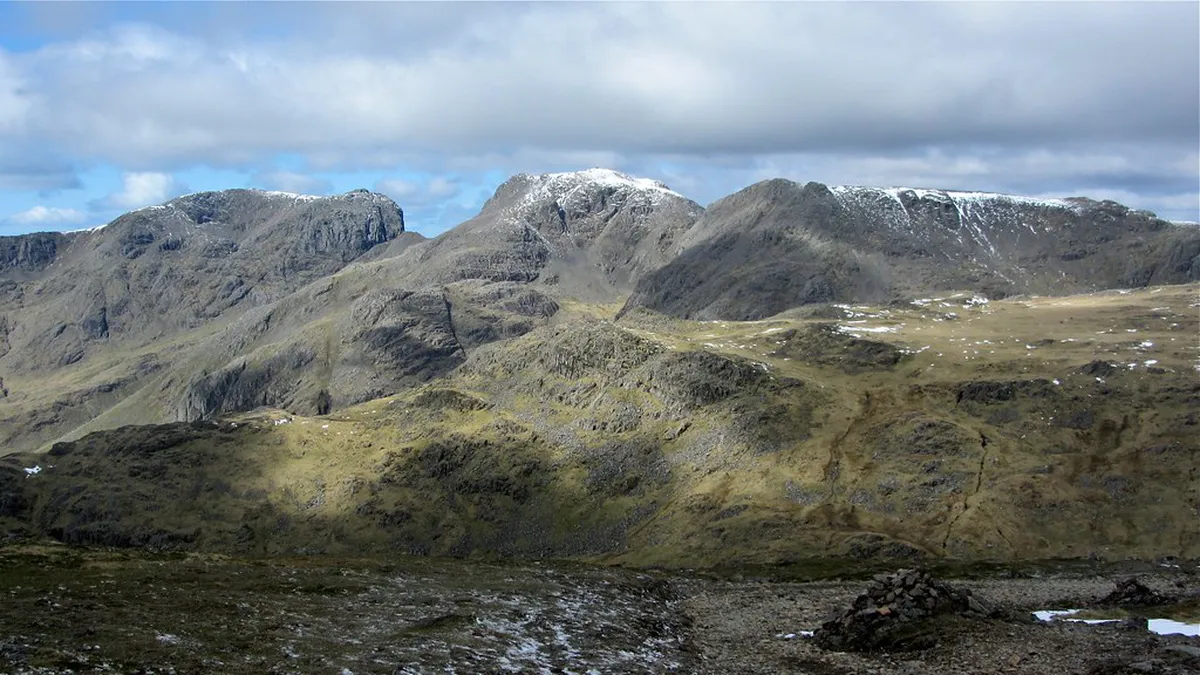
Last updated November 2026: Scafell Pike in winter, under snow or ice, is a winter mountaineering undertaking that needs suitable skills and equipment. For a Scafell Pike winter ascent, summer walking experience isn't enough, so base your decision on conditions, your whole party, navigation and daylight. Reaching the summit is optional, and cancelling is a valid result.
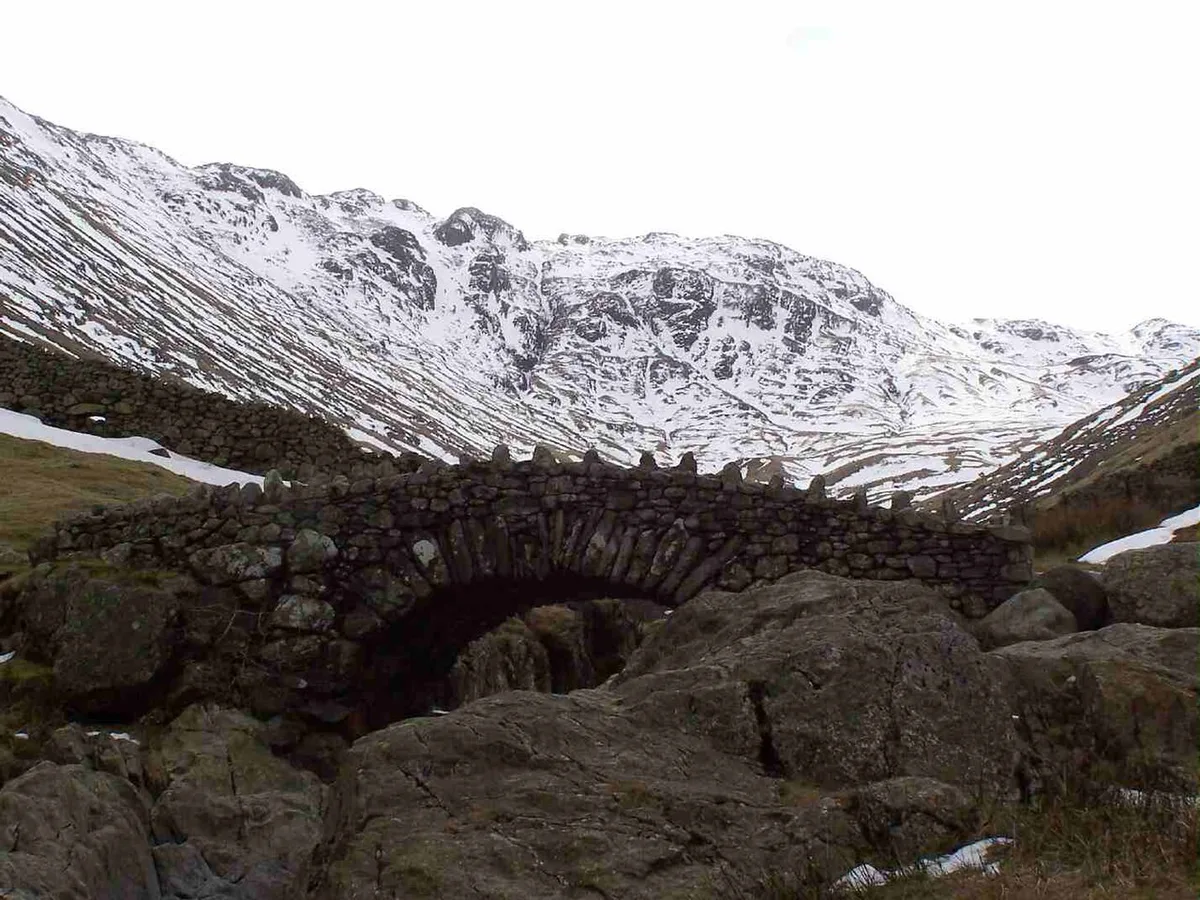
Featured image: walkinguphills, CC BY 2.0, via Flickr.
Should you go? Make the winter decision first
Decide before travelling, then reassess throughout the day. A popular route isn't automatically suitable, and “go ahead with planning” is not a safety clearance. Without winter skills, choose training, a suitably qualified guide or a different objective. Our first-time Scafell Pike advice can help with background planning, but don't treat it as winter clearance.
| Check | Go ahead with planning | Change the plan | Cancel or turn back |
|---|---|---|---|
| Forecast and ground | Both checked and understood | Important information is missing | Conditions exceed your party's ability |
| Winter experience | Everyone has relevant skills | Training or guided support is needed | Terrain is beyond anyone's skills |
| Poor-visibility navigation | You can navigate up and down | Choose an objective within your ability | You are unsure of your location |
| Equipment | Suitable, and everyone can use it | Obtain kit and learn to use it first | Essential kit or competence is missing |
| Daylight | Full return has a reserve | Shorten the objective | Your turnaround limit is reached |
| Water and escape | Crossings and retreat options assessed | Replan around unresolved problems | A crossing is doubtful |
| Travel | Access and journey home checked | Change the start or date | You cannot reach the start or get home reliably |
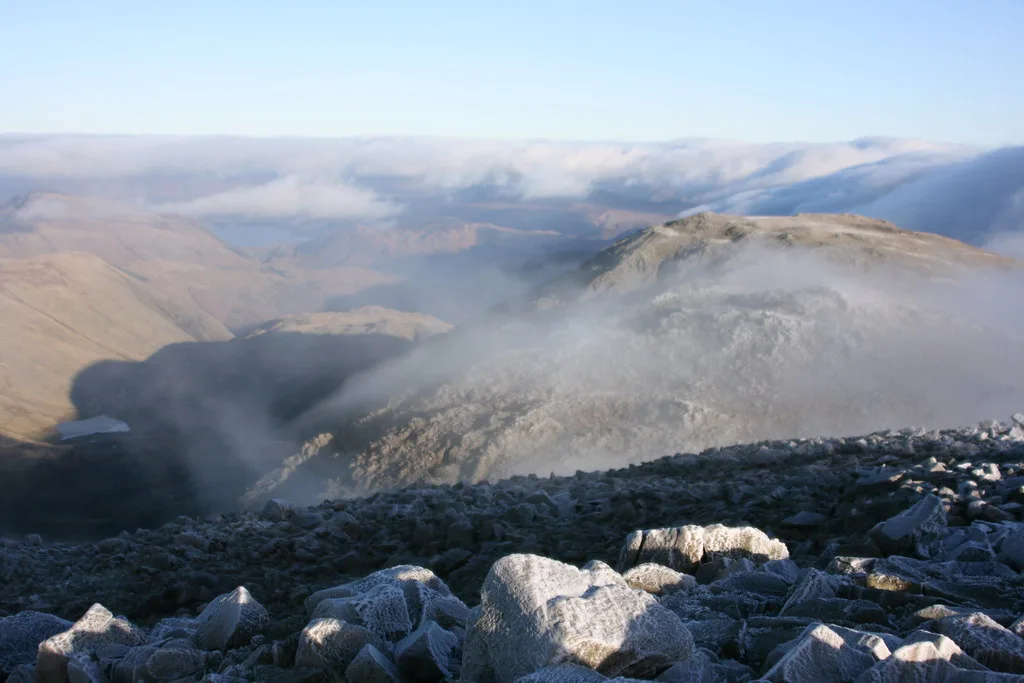
What changes on Scafell Pike in winter?
Snow and ice can make footing serious, slow your party and complicate retreat. Wind, rain, poor visibility and short daylight can add to those problems. Conditions at 978 m (3,209 ft) can differ sharply from those at your starting point. Water freezes at 0°C (32°F), so check the forecast freezing level alongside recent ground reports. Use the MWIS Lake District forecast for mountain weather. A weather forecast doesn't tell you the exact state of your path, snow slopes or stream crossings. Our Scafell Pike weather guide can support that check.
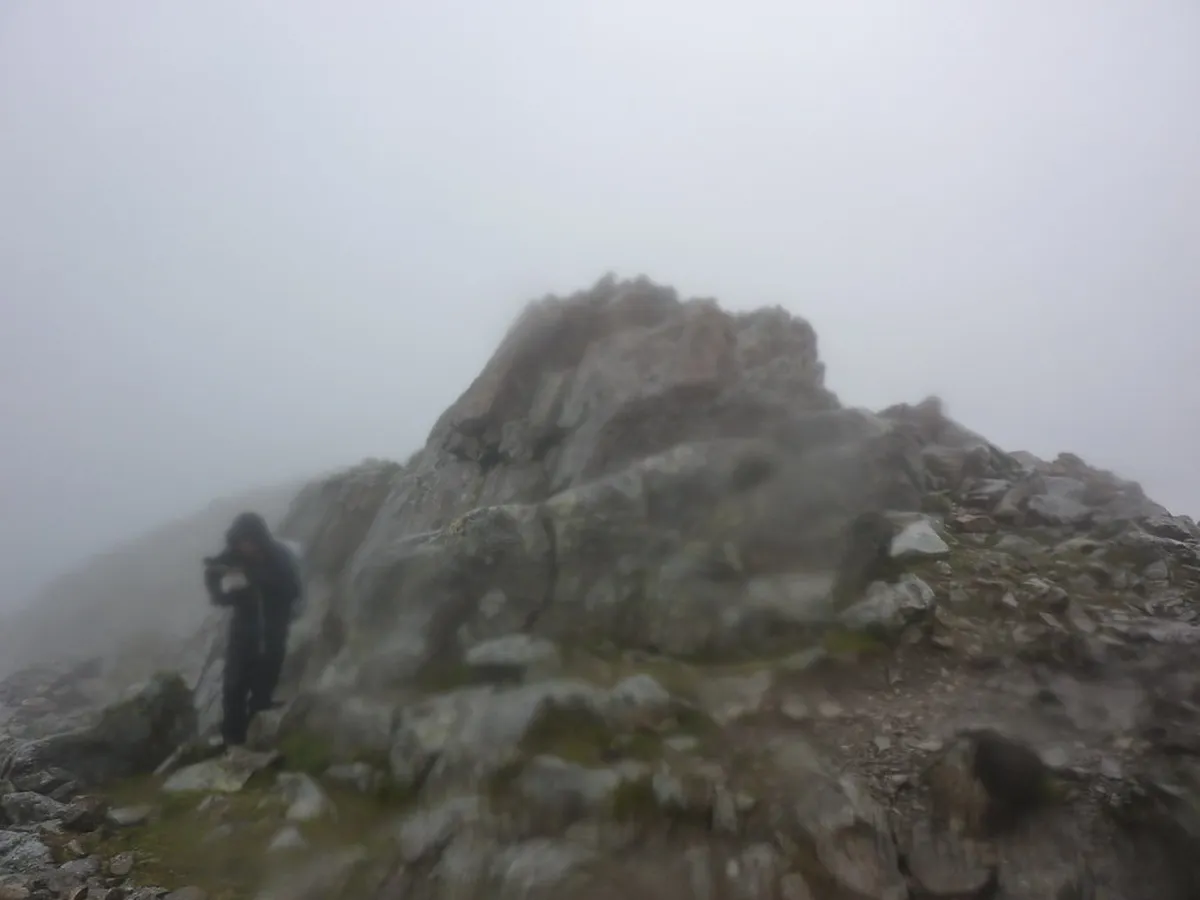
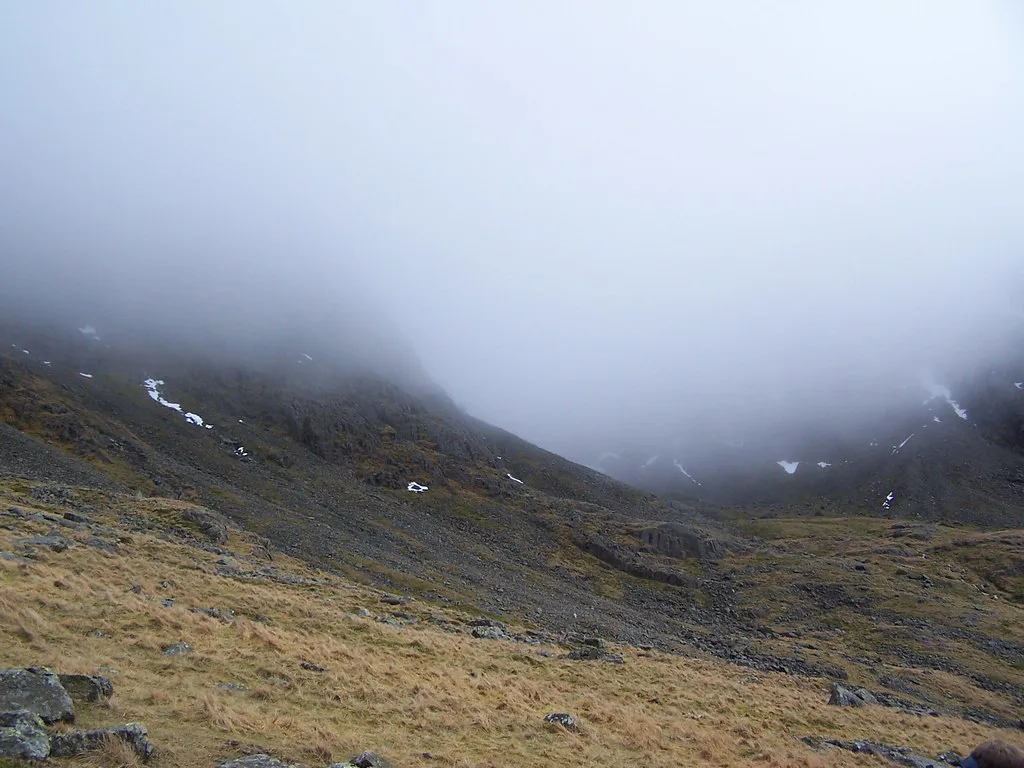
Cloud can make the summit boulder field easy to lose. Plan how you'll find the correct descent, including when tracks and path features are hidden. Calendar dates alone won't tell you whether snow or ice is present.
| Season Comparison | Summer walk without snow or ice | Winter ascent under snow or ice |
|---|---|---|
| Type of undertaking | Mountain walk | Winter mountaineering |
| Skills | Hill fitness and mountain navigation | Winter movement, hazard assessment and navigation |
| Equipment | Mountain walking kit | Added winter protection and suitable snow and ice equipment |
| Timing | Plan the full return | Allow for slower travel, limited daylight and retreat |
Which Scafell Pike winter route should you consider?
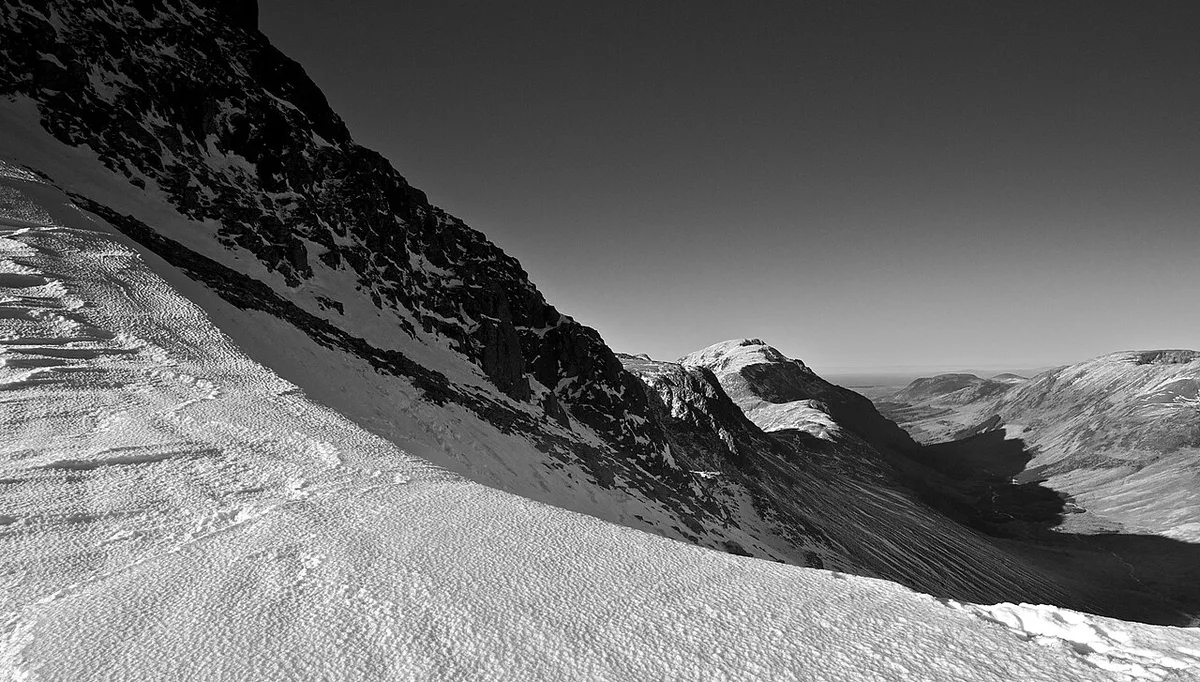
No start here can be called the safe winter choice. Wasdale Head is widely described as the shortest and most popular approach, but shorter doesn't mean easier under snow. Its Brown Tongue line follows a steep pitched path beside Lingmell Gill to Hollow Stones. It then meets the Corridor Route at Lingmell Col. Heavy rain can reportedly make the Lingmell Gill crossing impassable. Locate your planned crossing on the map, and don't improvise a way around it.
ScafellPike.com describes the Seathwaite route as longer but less steep, without establishing any winter advantage. Study the Wasdale ascent in detail before choosing it. Compare it with the Seathwaite approach. For the third start, review the route from Langdale. Our Scafell Pike route comparison gives the wider view.
| Start | Terrain and navigation checks | Time and retreat | Suitability caveat |
|---|---|---|---|
| Wasdale Head | Brown Tongue, Lingmell Gill, Hollow Stones and summit descent | Allow for the full return; identify where you can reverse | Shorter is not proof of winter suitability |
| Seathwaite | Check every slope, crossing and navigation point | Account for the longer approach and return | Less steep does not mean safe |
| Langdale | Map the complete ascent, crossings and descent | Time your own route and plan retreat | Assess it for current conditions and party skills |
Winter kit and the skills to use it
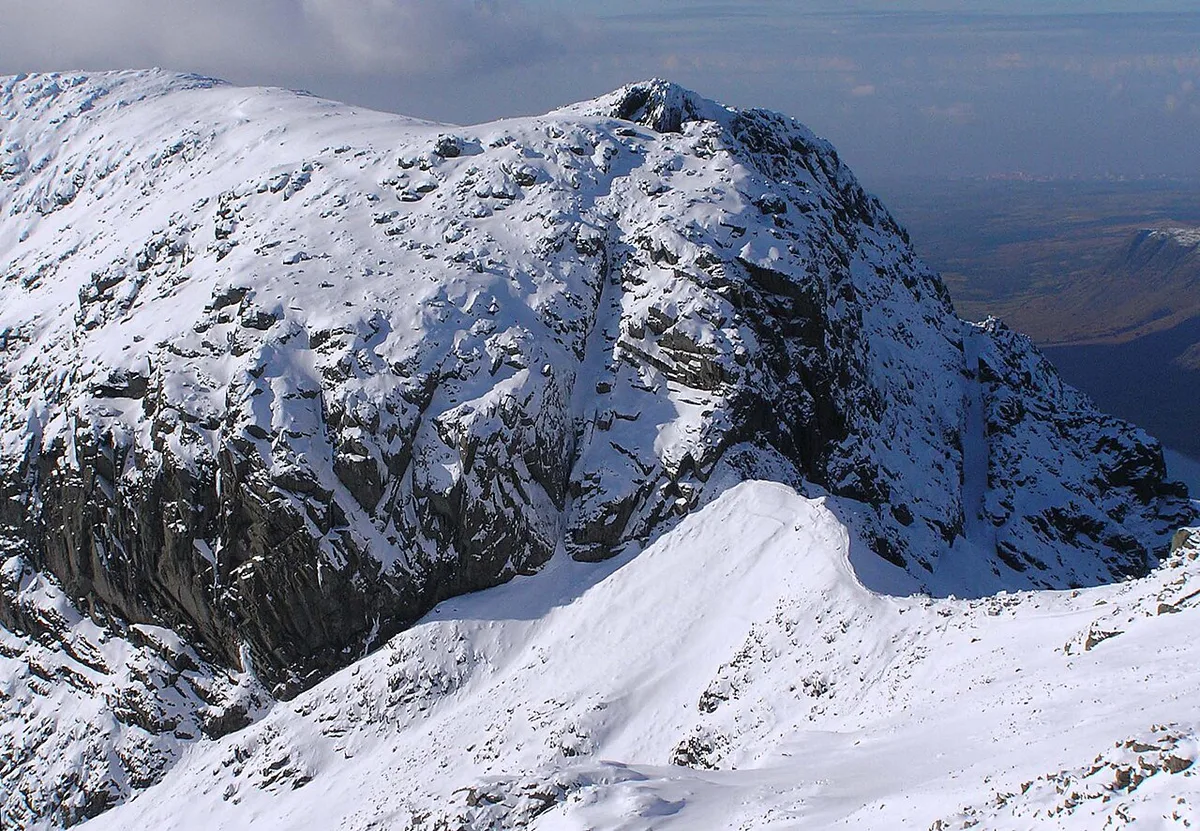
Pack for conditions on the high ground and for an unplanned delay. An ice axe and crampons may be needed on hard snow or ice. Get practical training in fitting crampons, moving on them, using an axe and stopping a slip. Lightweight traction aids are not equivalent to mountaineering crampons. Carrying either tool doesn't make you competent. You also need to assess avalanche and other snow hazards. Seek recognised training, and start with AdventureSmart's mountain safety advice for trip preparation.
- Warm layers, waterproofs, hat, gloves and spare protection
- Mountain boots suited to conditions and compatible with any crampons
- Map and compass, plus the skill to navigate without a phone
- Head torch and backup lighting or power
- Food, drink, first aid and emergency shelter
- Ice axe and crampons where conditions require them, with training to use them
How long should you allow, and when should you turn back?
No single duration fits every winter ascent. Work from daylight on your actual date, party pace, ground conditions, navigation, breaks and a reserve. Our guide to Scafell Pike climbing time is a planning input, not a winter promise. Agree a latest turnaround time before starting, even if the summit is close. Turn back earlier when any trigger below applies. A head torch is essential backup, but it shouldn't extend your deadline. If retreat itself becomes unsafe or someone cannot continue, seek help.
- Your party falls behind the plan
- You lose certainty about your location
- Terrain exceeds the party's skills or equipment
- A water crossing looks doubtful
- Weather or ground conditions worsen
- Anyone becomes cold, unwell or exhausted
Winter access, parking and accommodation
Check road conditions, parking arrangements and your journey home for the chosen start. Public transport users should confirm both directions for the actual date. For the western approach, consult the National Trust's Wasdale information. Our Scafell Pike parking guide helps you compare arrival plans. Staying near your start can reduce same-day travel, but check availability, cost and winter access. Get current quotes from operators and providers before committing.
- Parking charges and transport fares
- Accommodation rates and cancellation terms
- Equipment hire
- Guiding or winter skills training
Before you leave and if plans change
Make one final check on the day, and choose a backup that can include staying off the fells. Lower ground isn't automatically safe. Leave your route and expected return time with a contact, and agree what they should do if you're overdue. In a UK mountain emergency, call 999, ask for the police, then ask for mountain rescue. Give your location and the casualty's condition. Phone signal may be absent, so a mobile cannot be your only safety plan. Read more from Lake District mountain rescue teams. ScafellPike.com gives the summit grid reference as NY 215 072, but in an emergency report your actual location.
Navigating without a phone matters, because signal may be absent when you need to call 999 from the fell.
- Recheck forecast, ground conditions and access
- Confirm everyone's skills and kit
- Review the route, crossings, descent and retreat options
- Agree the turnaround time
- Share your plan and overdue instructions
Frequently Asked Questions
Which month is the best to climb Scafell Pike?
No month guarantees good conditions. ScafellPike.com favours late spring to early autumn for more stable weather, but you still need to check your chosen day.
What is the weather like on top of Scafell Pike?
Summit weather can change quickly and differ from valley conditions. Check wind, visibility, precipitation and freezing level in a current mountain forecast, then assess ground conditions separately.
Notes for your next walk
Optional updates to our Lake District walking guides.